
Early Pregnancy Scanning in Dairy Cows: How Veterinary Ultrasound Improves Dairy Herd Reproductive Management

Early Pregnancy Scanning in Dairy Cows: How Veterinary Ultrasound Improves Dairy Herd Reproductive Management
Early pregnancy scanning in dairy cows is an essential practice in modern dairy farm management. For dairy farmers, veterinarians, artificial insemination technicians, and livestock breeding specialists, identifying pregnant cows at an appropriate early stage is important for improving reproductive efficiency and maintaining consistent milk production.
In commercial dairy operations, every unsuccessful breeding cycle can increase the interval between calvings, affect milk production planning, and create additional management costs. Therefore, reliable pregnancy diagnosis is an important part of an effective dairy herd reproductive program.
Veterinary ultrasound technology has transformed the way dairy cow pregnancy examinations are performed. Unlike conventional methods that mainly provide indirect signs of pregnancy, ultrasound allows veterinarians to visualize the uterus, identify pregnancy-related structures, examine embryos, and evaluate ovarian conditions.
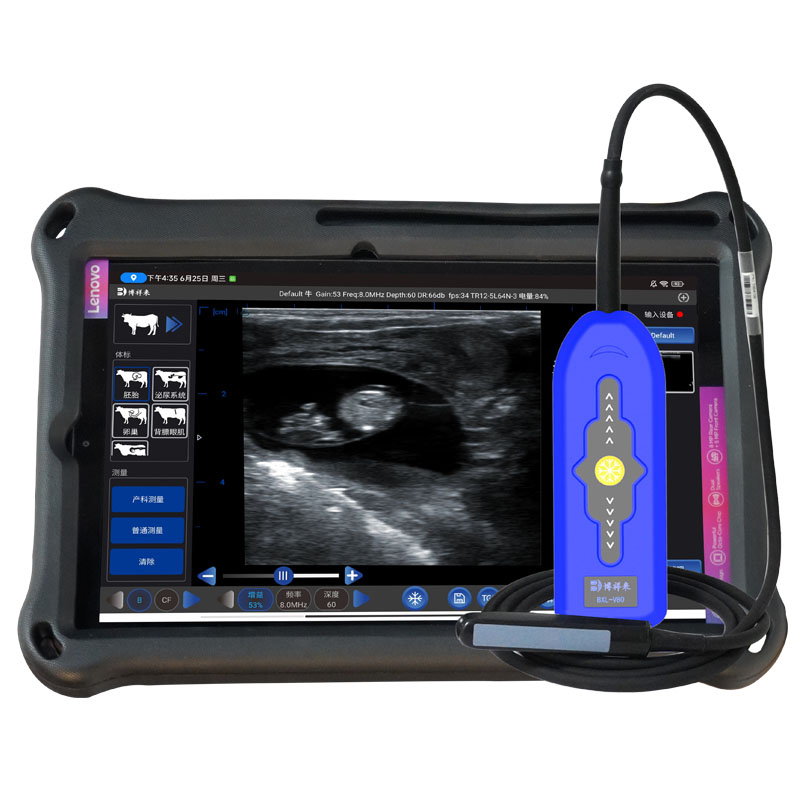
With the development of portable veterinary ultrasound scanners, dairy farmers and veterinarians can now perform reproductive examinations directly on farms.
BOXERLY, the international brand of Zhengzhou Boxianglai Electronic Sci-Tech Co., Ltd., specializes in manufacturing veterinary ultrasound imaging equipment for cattle and other large animals. Our products are designed to support professional dairy herd management, bovine pregnancy diagnosis, and veterinary reproductive examinations worldwide.
1. Why Is Early Pregnancy Scanning Important for Dairy Cows?
Reproductive performance is closely connected with the profitability of a dairy farm.
When a dairy cow does not become pregnant after artificial insemination, delaying the diagnosis may result in missed breeding opportunities and longer non-pregnant periods.
Early pregnancy scanning helps dairy farms make more informed reproductive management decisions.
Faster Identification of Pregnancy Status
Ultrasound examination helps veterinarians identify pregnancy-related structures within the uterus.
By examining cows at an appropriate stage after insemination, dairy farms can obtain useful information about reproductive status and organize subsequent management.
Better Management of Non-Pregnant Cows
Identifying non-pregnant cows allows breeding teams to review their reproductive status and plan the next insemination cycle.
This is particularly important for large dairy farms managing hundreds or thousands of animals.
Monitoring Embryonic Development
Veterinary ultrasound allows operators to visualize the gestational sac and embryo as pregnancy progresses.
At a suitable gestational stage, embryonic heartbeat examination can also provide information about pregnancy viability.
Improved Dairy Herd Reproductive Records
Regular ultrasound examinations help farms maintain more detailed reproductive records, including:
– Artificial insemination dates.
– Pregnancy examination dates.
– Pregnancy confirmation results.
– Embryonic development observations.
– Follow-up examination records.
These records support more organized dairy herd fertility management.
2. When Should Dairy Cows Be Scanned for Pregnancy?
One of the most common questions among dairy farmers is:
How many days after artificial insemination can a dairy cow be scanned for pregnancy?
Transrectal B-mode ultrasound can detect early pregnancy structures before many conventional examination methods provide reliable confirmation.
However, the reliability of early pregnancy diagnosis depends on the gestational stage, ultrasound equipment, probe performance, and operator experience.
The following table provides a general reference for dairy cow pregnancy scanning.
Days after AI Ultrasound examination
18–21 days Early reproductive assessment; pregnancy confirmation is challenging
22–25 days Early pregnancy structures may be detectable by experienced operators
26–30 days Greater opportunity to identify the gestational sac and embryo
30–35 days Embryo visualization and assessment of cardiac activity
35–45 days More developed embryonic structures can be examined
For routine dairy farm pregnancy diagnosis, approximately 28–30 days after artificial insemination is a practical examination period.
Very early scans require careful interpretation. A negative or inconclusive result should not automatically be treated as definitive evidence that a cow is not pregnant.
A follow-up examination is recommended when pregnancy status remains uncertain.