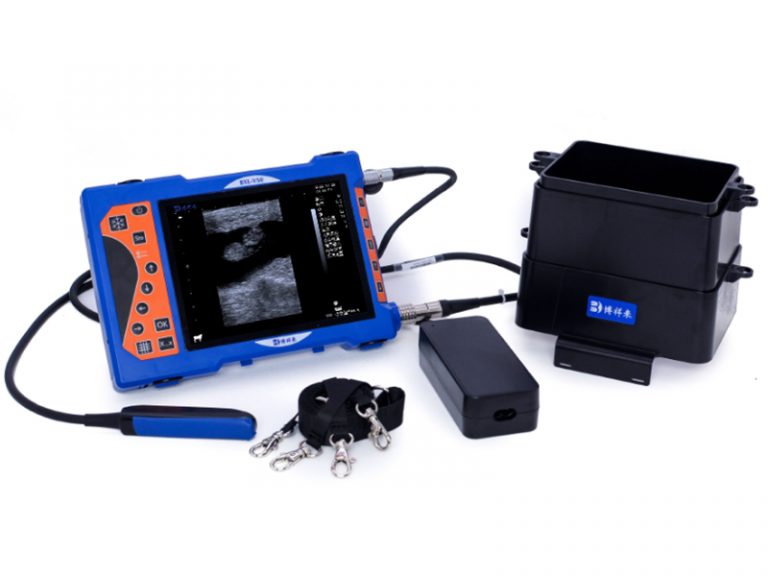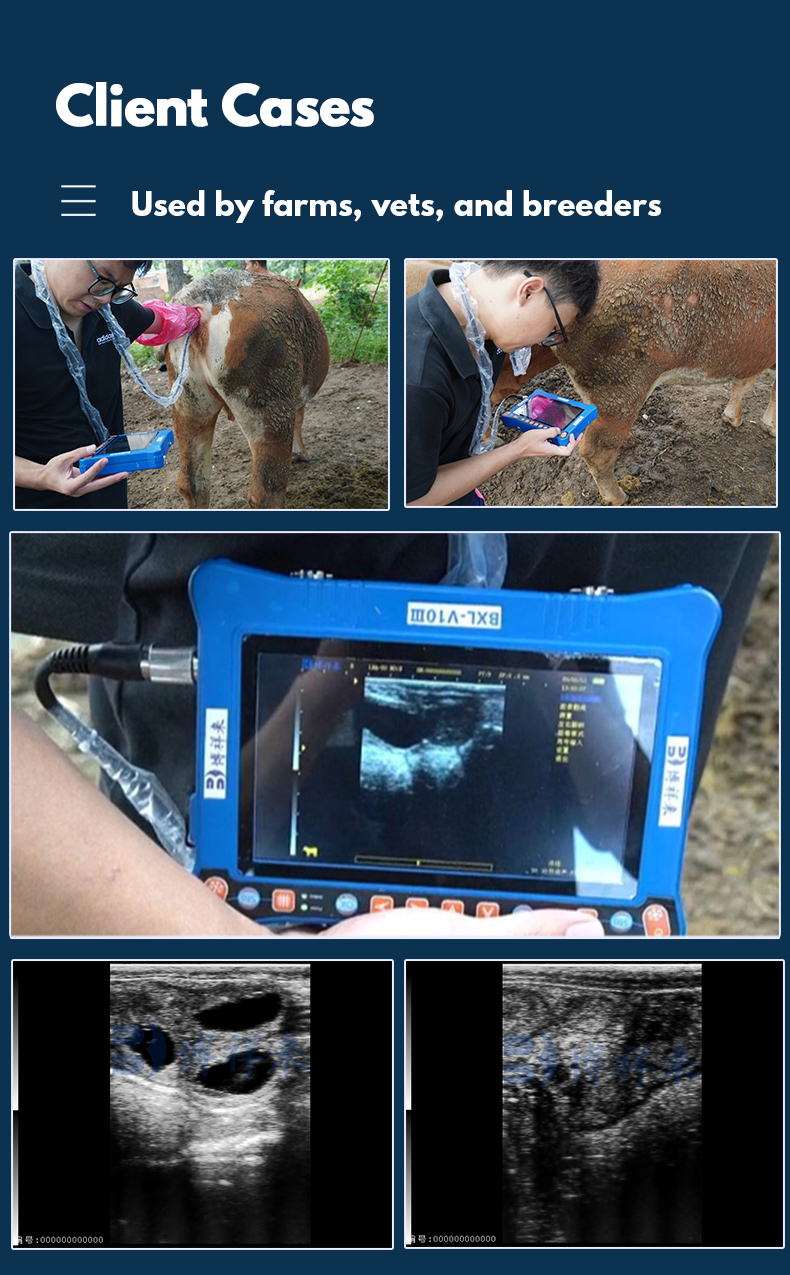
Cattle Pregnancy and Fertility Scanner: Advanced Ultrasound Technology for Modern Cattle Reproduction

Cattle Pregnancy and Fertility Scanner: Advanced Ultrasound Technology for Modern Cattle Reproduction
Why Is a Cattle Pregnancy and Fertility Scanner Essential for Modern Farms?
Reproductive efficiency is one of the most important factors influencing the profitability of dairy farms, beef cattle operations, and professional breeding centers.
Every unsuccessful insemination, delayed pregnancy diagnosis, or missed reproductive problem can increase production costs and reduce the number of calves produced per year.
For this reason, more veterinarians, cattle breeders, and livestock producers are investing in professional cattle pregnancy and fertility scanners to improve reproductive monitoring and breeding management.
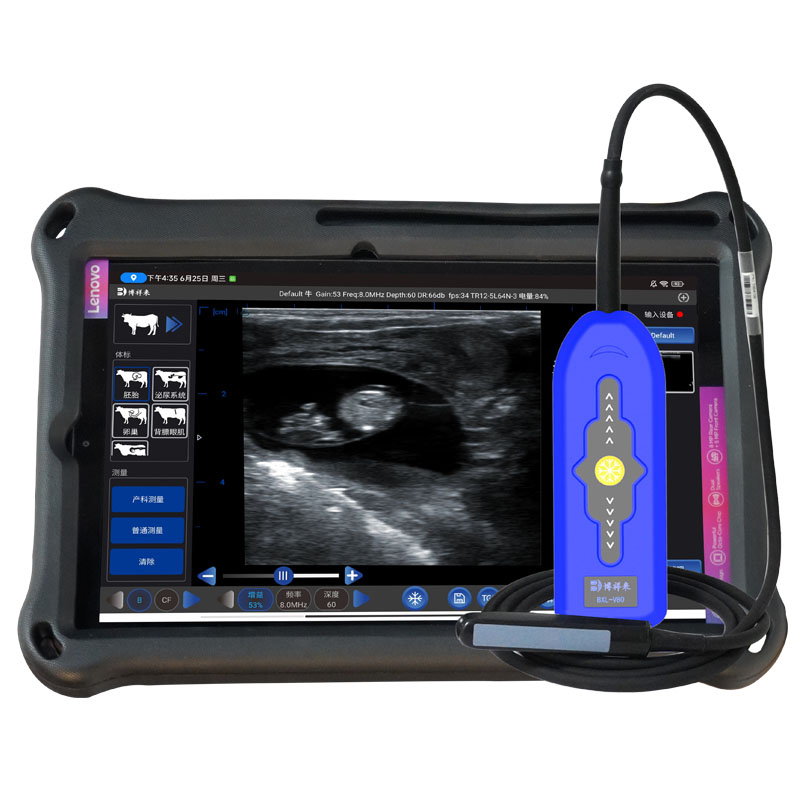
Modern veterinary ultrasound technology provides much more than basic pregnancy detection. It allows veterinarians to examine the uterus, ovaries, follicles, corpus luteum, and other reproductive structures.
With advanced B-Mode and Color Doppler imaging, a professional cattle ultrasound scanner can provide valuable information about reproductive conditions and support more informed breeding decisions.
Whether you manage a large dairy herd, operate a beef cattle breeding farm, or provide veterinary reproductive services, choosing the right cattle ultrasound machine can make a significant difference.
In this article, we explain how cattle pregnancy and fertility scanners work, their major applications, and what features to consider when selecting professional veterinary ultrasound equipment.
1. What Is a Cattle Pregnancy and Fertility Scanner?
A cattle pregnancy and fertility scanner is a specialized veterinary ultrasound device designed to examine the reproductive system of cows and heifers.
Unlike traditional pregnancy testing methods, ultrasound provides real-time images of internal reproductive structures without requiring surgical procedures.
Using an appropriate rectal ultrasound probe, veterinarians can perform transrectal examinations to assess:
Uterus and uterine structures.
Ovaries and ovarian morphology.
Follicle development.
Corpus luteum (CL).
Early pregnancy structures.
Embryonic development.
Reproductive abnormalities.
Depending on the ultrasound model and imaging functions, the scanner can also provide Color Doppler information about blood circulation within reproductive tissues.
This makes veterinary ultrasound an important tool for both pregnancy diagnosis and broader reproductive assessment.
2. Main Applications of a Cattle Pregnancy and Fertility Ultrasound Scanner
A professional cattle reproductive ultrasound machine supports several important applications.
A. Early Pregnancy Diagnosis in Cattle
Early pregnancy detection allows farmers to identify cows that may have conceived after artificial insemination (AI) and organize appropriate follow-up examinations.
With conventional B-Mode ultrasound, veterinarians can identify pregnancy-related structures as they develop.
In experienced hands, transrectal ultrasound can often detect pregnancy from approximately 28–30 days after insemination, although the exact timing depends on equipment, animal factors, and operator skill.
Advanced Color Doppler systems offer additional possibilities for earlier pregnancy assessment.
For example, evaluating corpus luteum blood flow around Day 21 after AI can help predict pregnancy status when combined with other reproductive indicators.
This can support more efficient cattle breeding programs.
B. Ovarian Follicle Examination
Follicles are important structures in the female reproductive system.
Monitoring ovarian follicles helps veterinarians understand ovarian activity and reproductive development.
A cattle fertility ultrasound scanner can help examine:
Follicle size.
Follicle development.
Dominant follicle identification.
Ovarian structures.
Changes during the estrous cycle.
These observations are useful in reproductive monitoring, synchronization programs, and assisted reproductive technologies.
C. Corpus Luteum Examination
The corpus luteum is a temporary ovarian structure formed after ovulation.
It produces progesterone, which is essential for maintaining pregnancy.
Ultrasound examination allows veterinarians to evaluate its size, shape, and internal appearance.